Hualngoram Peoples Organization (HPO)
Purpose of the Organization
Because the people’s government of Myanmar lost its power through the military coup on February 1, 2021, the nation as a whole began the Spring Revolution to establish a true Federal Democracy. As the Myanmar Military used force to suppress the people, the citizens formed local defense groups called the People’s Defense Force (PDF) in different areas to fight back against the brutal military.
To protect the lives, homes, and safety of the people living in Hualngoram, the Hualngoram People’s Organization (HPO) was unitedly established on June 6, 2021.
Objectives of the Organization
To participate among those resisting the dictatorship for the establishment of a Federal Democratic Government in Myanmar.
To organize an armed force to protect the people living in and around Hualngoram.
To ensure the security and stability of Hualngoram.
To work toward achieving the higher political status that Hualngoram rightfully deserves.
To remain a non-political organization, not aligned with or controlled by any political party.
To work for the spread and growth of God’s kingdom.
Aims and Principles
To protect and provide safety for the people of our land from the violent soldiers, ensuring they are not deprived of food, shelter, clothing, or dignity.
To make sure that every child in our land can continue their daily education without interruption.
To help our people enjoy good health and well-being by providing proper medical care and assistance.
To ensure our citizens can freely and peacefully earn their daily livelihood, and to promote the growth of God’s kingdom in our land.
To continually work toward the expansion and strengthening of God’s kingdom.
Why We Need the Hualngoram Peoples Organization (HPO)
For many years since 1962, under the existing township administrative system, the voices of the Hualngoram people have been largely unheard in crucial areas such as education, rural development, infrastructure, and road construction. This long-standing neglect has left the people of Hualngoram disheartened and frustrated by the unequal distribution of public resources.
When the military junta seized power on February 1, 2021, and the Spring Revolution emerged, it opened a rare opportunity for communities across Myanmar to reconsider local leadership and governance. Seizing this moment, on June 6, 2021, the people of Hualngoram founded the Hualngoram Peoples Organization (HPO) — a united platform to strengthen local participation, amplify community voices, and work toward equitable development and representation for their region.
A Region of Diversity and Shared Heritage
The Hualngoram region is home not only to the Hualngo people, but also to many other ethnic groups and tribes, including the Zahau, Tlaisun, and Zaniat, among others. Despite this diversity, the communities share a deep cultural connection to the land and a common desire for recognition, dignity, and progress.
Recognizing this diversity, the Hualngoram Peoples Organization (HPO) works to revive the Hualngoram region and restore the rights of its people. The organization serves all residents — regardless of ethnicity or background — and is grounded in the principles of inclusivity, equality, and collective advancement.
Building a Future of Self-Governance
One of HPO’s central goals is to secure official recognition of Hualngoram as a distinct administrative unit, allowing its people greater autonomy and self-governance. Local decision-making is essential to ensuring that the unique needs and priorities of the region are properly addressed — something that centralized township systems have long failed to deliver.
In addition, HPO seeks to preserve and promote the cultural heritage and languages of the region’s diverse ethnic groups. It aims to foster pride in identity while advancing education, healthcare, and sustainable economic development. By reviving Hualngoram, the organization hopes to empower local communities to take charge of their own destiny, ensuring that their rights, voices, and interests are fully respected.
Confronting Modern Challenges
The need for such an organization has never been greater. The people of Hualngoram now face increasing pressure from deforestation, mining, and other large-scale development projects that threaten their lands, environment, and traditional ways of life. Without strong community representation, these external forces risk further marginalizing local populations and depleting their natural resources.
In response, the HPO has positioned itself as a guardian of the region’s rights and resources — advocating for sustainable management and ensuring that any development benefits are distributed fairly among local residents. Through advocacy, cooperation, and grassroots participation, the organization seeks to safeguard both the environment and the social fabric that binds the Hualngoram people together.
A Vision for a Fair and Prosperous Future
Ultimately, the Hualngoram Peoples Organization is more than just an institution — it is a movement for renewal and justice. Its mission is to promote the well-being, unity, and prosperity of all the people in the Hualngoram region while preserving their cultural identities, traditions, and heritage.
By standing together, the people of Hualngoram are reclaiming their voice, protecting their homeland, and laying the foundation for a future built on equality, respect, and self-determination.
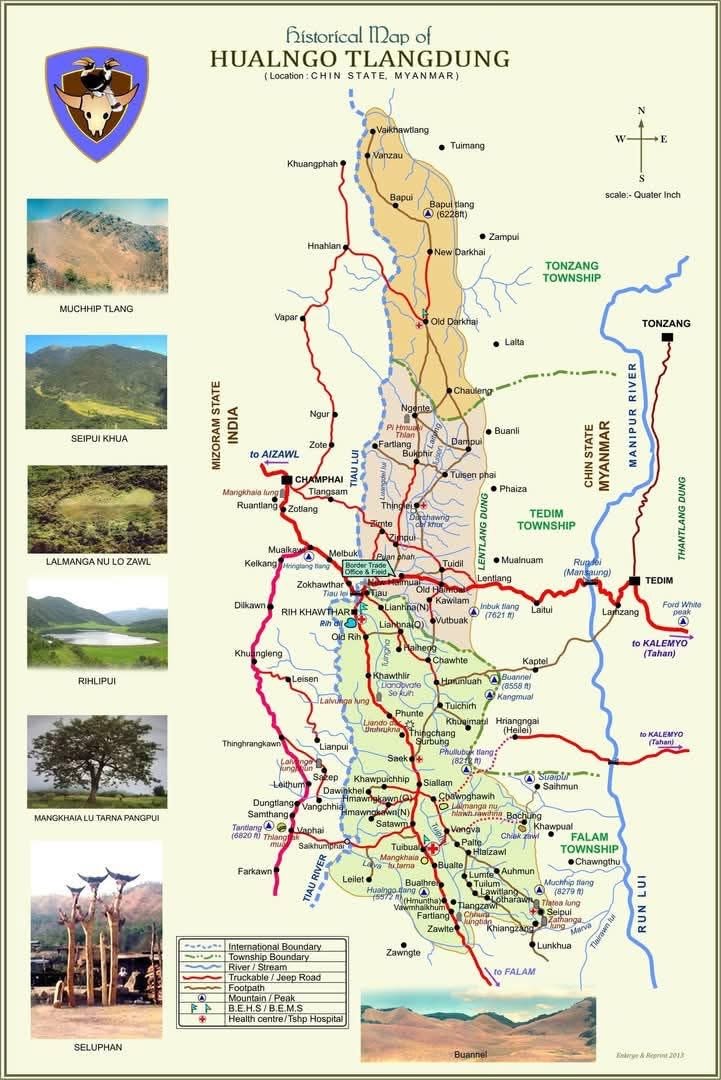
Does Hualngoram Really Exist?
Some people have claimed that the Hualngo have no land of their own and that Hualngoram doesn’t actually exist — but that’s far from the truth. Let’s clear that up.
In the days of our ancestors, our forefathers had already settled and established their land under their own tribal name. Today, within the western Chin State, there are various villages and regions known as Hualngoram, Zahauram, Tlaisunram, Zaniatram, and others. When the British arrived in 1896 and brought the Chin Hills Regulation Acts, they officially divided territories and recognized areas such as Hualngo Area, Zahau Area, and Zaniat Area. Land revenue tax was collected separately within each of these areas.
The British appointed Tribal Chiefs to collect these taxes. However, the Hualngo chiefs refused to be under a single chief or have their villages ruled collectively by any appointed Tribal Chief. Because there was no officially recognized Hualngo tax collector, the Zahau Chief took over tax collection for the Hualngo region. Therefore, when people say the Zahau Chief “ruled” Hualngoram, that is not true — he only acted as the tax collector of the British for the area.
The term Hualngoram doesn’t refer to land belonging only to the Hualngo tribe; it’s a broader region made up of many clans and villages, with the Hualngo tribe being the original namesake. In earlier times, there were about 58 villages, but two of them are now uninhabited. Therefore, today there are 56 villages and towns.
After Burma gained independence in 1948, the British administrative system continued under the “Circle” structure. The Hualngo region was classified as the Hualngo Circle, and later divided into Circle I and Circle II until 1962. When General Ne Win’s Revolutionary Council came to power, the administration was reorganized again, and the Hualngoram villages were scattered into three different Townships — Tonzang, Tedim, and Falam.
So, Hualngoram has existed since our ancestors’ time and was still recognized up to 1962 under the military government’s restructuring. Today, with the fall of the military regime, our elders’ vision to reestablish Hualngoram is being revived through the Hualngoram Peoples Organization (HPO), which continues to work toward restoring and uniting our region.
Mizo (Ṭawng) Version
Pawl Din Chhan
Myanmar rama mipui sorkar chu February 1, 2021 khan sipai chakna hmanga thuneihna pawng lak a nih tak avangin Federal Democracy dik tak kan hmuh theih nan rampum huapa Spring Revolution neih a ni a. Myanmar Military Army ten ralthuam hmanga mipui chunga kut an thlak tak avangin mipui veng himtu pawl People Defense Force (PDF) chu hmun hrang hrangah dinin sual sipaite an do let ve ta a. Hualngoram chhunga cheng mipuite nunna leh in-leh-lo veng him turin Hualngoram Peoples Organization (HPO) chu June 6, 2021 ah lungrual taka din ve nghal a ni.
Pawl Thil Tumte
- Myanmar ramah Federal Democracy sorkar a din theihna tura sualtute zinga tel ve tur leh Hualngoram leh a chhunga cheng mipuite veng himtu tur Arm Force din
- Hualngoram chin hum him
- Hualngoram tan a phu tawk political status sang ber nei tura hmalak
- Non-Political Party a ni ang a, eng political party mah zawl bik nei lo organization a ni ang.
- Pathian ram a lo zau deuh deuh theih nana hmalak
Ṭawngṭai Thupuite
- Kan ram tana nunna thapa ram mite tan (sual sipai laka an himna tur, ei leh in, silh leh fen an tlakchham loh nan)
- Kan ram chhunga naupang zawng zawngin nitin zirna an chhunzawm zel theih nan
- Mipuiten hriselna tha an lo neih theih nan (damdawi tha leh enkawnna tha kan pek theih nan)
- Kan ram mipui ten thlamuang taka ei bar an zawn theih nan leh Pathian ram a lo zau zel nan
- Pathian ram a lo zau deuh deuh theih nan
Hualngoram A Awm Tak Tak Em?
Mi thenkhatin Hualngo in ram an nei lo, Hualngoram tih pawh a awm ngai lo tiin min sawi chhe fo mai a, tawite in han chhang mai ila a tha awm e.
Kan pipute hun lai khan mahni hnam hming chawiin ram an lo insem hlawm a. Tuna Falam Township chhungah hian Hualngoram, Zahauram, Tlaisunram, Zaniatram etc… tiin an lo awm hrang thliah hlawm a ni. British in 1896 kum atanga Chin Hills Regulation Acts hmanga min rawn awp hnu pawh khan, ram bung then sa chu ringin Hualngo Area, Zahau Area, Zaniat Area etc… tiin min awp ve nghal a, Land Revenue Tax pawh an mahni area te teah, a hrang thlapa khawn vek a ni.
British ho chuan an aiawha Tax khawntu atan Tribal Chief an ruat thliah thliah hlawm a. Hualngo lalte erawh chuan khaw khat leh khaw khat chungah tumah thu kan nei lo, lal chhawng hnih kan nei ngai lo tiin Tribal Chief hi duh lovin an lo hnawl a. Hualngo area ah Tax khawntu tur an awm tak loh avangin Zahau Chief in a khawn ta a ni. Zahau Chief in Hualngoram pawh a awp vek tia an sawi thin hi a dik lova Zahau Chief chu Hualngorama Chhiah khawntu (Tax Collector) a ni zawk. Tin, Hualgoram kan tih hian Hualngo chauh an awm tihna a ni lova, a chhungah chi peng tam tak an awm a, Hualngo chu a ram hming putu mai a ni. Tun hma deuh chuan khaw 58 a ni thin a, khaw 2 a ram tak avangin khaw 56 a la awm.
Burma in Independent a hmuh (1948) hnu pawh khan British tih dan zirin Circle anga then hrangin inawpna a kalpui a. Hualgoram chin pawh chu Hualngo Circle tiin an then hrang a, a dung zawng a sei deuh avangin Circle I & Circle II tiin 1962 thleng khan kalpui a ni. Revolutionary Council (Gen. Ni Win-a hote) in sorkarna an rawn chelh hnu khan Township Area chu an duh dan danin a then hrang ta thluah mai a, Hualngoram khuate pawh chu Township Pathum (Tonzang, Tedim leh Falam) ah then darhin a lo awm ta a ni. Hualngoram tih chu kan pi leh pute hun atangin 1962 kuma sipaiin sorkarna an lak thleng khan a awm chiang a ni.
Tunah hian sipai sorkarna paih thlak a, kan pi leh pute min hnutchhiah Hualngoram chu din thar leh turin Hualngoram Peoples Organization (HPO) chuan hma a la mek a ni.
HPO hmalakna leh a chin tlangpui report tawi (20 October 2023)
CDF-Hualngoram: Kan do ber sual sipai ten ralthuam an chelek avangin an mahni laka mipuite veng him tur leh do let ve thei turin Chinland Defence Force-Hualngoram chu din a ni. Sipai hotu kan neih that avangin kan sipaite an felin hnam dang karah pawh chhuanawm tak an ni ta. Mi thahnemngaite zarah ralthuam lam pawh an nei changtlung thaw khat ta viau mai. Chhum lo chat lova sual sipai nena indo/inkap reng an nih avangin thi leh hliam pawh an awm ve ta nual bawk. Hualngoram a lo din chhuah leh theihna tura nunna hlantute hi an chhuan awm tak zet a ni.
Administrative: Hualngoram sipaite venhimna hnuaiah khaw 40 dawnah mipui mahnia inawpna (Local Administrative Board) kalpui mek a ni a, Hualngoram Administrative Board (HAB) in a khaikhawma lungrual taka hma lak mek a ni. LAB la din rem chan lohna khuaahte pawh din zel tura hma lak mek a ni bawk. LAB/HAB te tanpui turin Hualngoram Police Force pawh din fel a ni tawh a; rukru, pawngsual leh tual that thlengin sualna chi hrang hrang chin fel dan ngaihtuahin an buai ve hle thin. Tan in (Jail) a khung pawh mi 10 tha vel an nei reng bawk. Thubuai relfeltu pawl (Judiciary Board) pawh din fel a ni tawh bawk a. An ni hian police ten misual an mante an zawhfiah hnuah an chungthu an rel thin.
Education: Hualngoram Education Board leh Hualngoram Education Working Committee din a ni a, khaw tina LAB te tawiawmna leh kan sipaite ven himna hnuaiah nitin zirna school 40 zet hawn tawh niin zirtirtu mi 70-80 vel an awm a, zirlai naupang pawh mi 1000 chuang zet an awm. Zirtirtute hi Civil Disobedient Movement-CDM a telte leh mi tlawmngaite an ni a, lawmman atan thla tin Ks.100,000/- (Kyats Nuaih Khat) chu HPO in mi thilphalte thawh khawm atangin a pe thin.
Health: Hualngoram mipuite hriselna hi kan ngaih pawimawh zinga mi a ni a, Doctor puitling pakhatin kan sipai hmunpui (Liando Camp) ah full time in min thut chilh hlauh mai a kan vannei hle. Khaw tinah bial fangin Free Mobile Clinic te an hawng thin a, Chin Health Organization tanpuina-in naupang leh naupai (raipuar) te hnenah Vaccine an pe thin bawk. Thawktu an indaih loh em avangin kan doctor leh a puibawmtu nurse te, LAB hruaitute an hah thin hle a ni. Thla an timuangin mipuiin an tangkaipui hle bawk.
Political: Politics lamah pawh hma kan sawn cho ve zel a, Chin unau dangte rualin ke kan pen ve thei tawh e. Tunah hian Chinland Council leh Chinland Government a lo din chhuah theihna turin Chinland Constitution Draft ziak mek a ni a, a ziaktu zingah hian HPO kan tel ve a ni. Kan beisei anga Chinland Council a lo hlawhtling cho zel a nih chuan Hualngoram pawh a ding chhuak ve ngei ang. Chu tih hunah chuan Hualngoram Regional Council emaw kan din ve ang a, Township or District paltlang ngai tawh lovin direct in Chinland Government kan zawm ve thei tawh dawn a ni. Hualngoram mipuiten kan aiawha kan thlan Chinland Council ah leh Chinland Government hnuaia Ministry hrang hrangah kan tir ve thei tawh dawn a, a tak ram kan thlen hlan a nghahhlelh awm tawh tak zet a ni.
Amaherawh chu kan hmabak a la thui khawp mai a. Heng kan beisei leh kan thil tumte hi a lo hlawhtlin theih nan Hualngoram chhulchhuak zawng zawngte kan inlungrual hle a tul a ni. Federal Democracy ram din chhuah a, Local Government hial din tum kan nih avangin a senso (a man kan pek tur) a tam em em mai a, nuna hlu tak tak kan chan nual tawh bakah sum leh tha kan seng teuh tawh bawk. Chuvangin mi dang tih atan chauh khek lovin kan theihna leh kan tangkaina zawn theuh atangin tan i la ho zel ang u. Hualngoram in par a chhuang mek a, kan tu leh fate chenfak tlak khawpa a lo parvul theih nan tawngtaina nen i bei fan fan ang u. Mi dang tana malsawmna kan nih theuh theih nan kan neih ang angte phal taka pe theuh turin kan insawmin kan inngen tak meuh meuh a ni e.